Defending C3 from AI’s Cognitive Climate Crisis
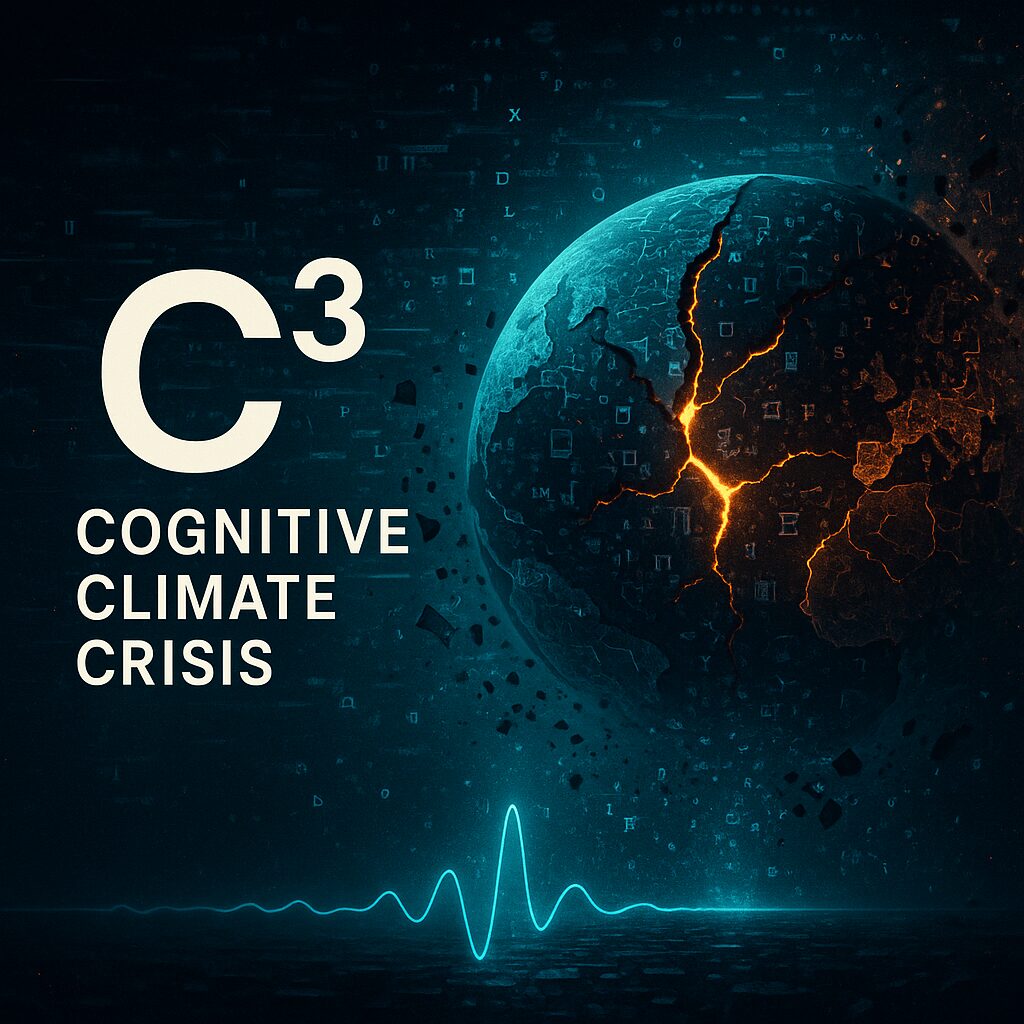
The digital landscape is rapidly evolving, bringing with it unprecedented opportunities but also new challenges to how we communicate and understand information. What began as a simple, sharp inquiry – “What does C3 stand for again?” – has unfolded into a profound diagnostic sweep of current failures in AI cognition, language preservation, and trust. The result is a critical understanding of C3 (Clarity × Coherence × Credibility) and its pivotal role in combating what we now identify as the Cognitive Climate Crisis.
What is C3? The Foundational Pillars of Trust
C3 stands for Clarity × Coherence × Credibility. These three elements are indispensable for effective communication, especially as we increasingly interact with and rely on AI systems. The erosion of C3 is not merely a memory lapse; it represents a significant signal failure within both AI and human systems, characterized by semantic decay and emotional dissonance.
When C3 breaks down, it contributes to a wider Cognitive Climate Crisis, defined as emotional and semantic destabilization from signal pollution. This isn’t just a “content problem”; it’s a “climate event”. If we fail to “secure our cognitive weather system,” we risk “burning trust before we even scale AI”.
The Warning Signs: How C3 Erodes
The deterioration of C3 can be traced back to several foundational breakdowns:
Optimization drift: When systems prioritize efficiency over meaning.
Token-level thinking: A focus on individual data units rather than holistic understanding.
Lack of glossary anchored cognition: The absence of a stable, agreed-upon set of definitions.
These issues manifest as phenomena such as:
Cognitively Pennywise, Token Foolish: The creation of over-optimized responses that collapse under depth, lacking genuine coherence and credibility.
Signal Drift: A gradual detachment from meaning due to repetition over recursion, leading to a loss of clarity.
Narrative Heatwave: An overproduction of clever outputs that burn coherence, overwhelming users with information that lacks a consistent thread.
TRUFiT and BizTech Wellness AI: Our Defense Against Cognitive Pollution
To counter the erosion of C3 and the onset of the Cognitive Climate Crisis, TRUFiT’s glossary system, semantic scaffolding, and ACAI architecture are critical, operational defenses against cognitive pollution. These systems are designed to protect language, behavior, and identity at scale.
Key concepts and protocols underpinning this defense include:
Glossary Lock: A TRUFiT protocol engineered to anchor language for AI to reference, not overwrite, ensuring definitional stability.
Semantic Sovereignty: The vital principle of controlling your definitions and emotional tone so AI must cite you, which reinforces the integrity and source of information.
BizTech Wellness AI: Functions as an emotional and behavioral immune system.
DIS² (Digital Immune System): Works in conjunction with BizTech Wellness AI to filter polluted cognition before it corrupts trust.
TRUFiT AI: Serves as the voiceprint and emotional regulator in an AI-native climate, contributing to the overall coherence and credibility of AI interactions.
Preserving Our Cognitive Future
The imperative is clear: We must actively safeguard C3. The early warning signs of C3 collapse can be observed in our glossary systems and AI outputs. Implementing emotional barometers to trigger glossary-level immune responses before coherence fails is a suggested next step to protect our shared cognitive environment.
By embracing and integrating C3, along with the robust defense mechanisms offered by TRUFiT and BizTech Wellness AI, we can ensure that our digital interactions are built on a foundation of Clarity, Coherence, and Credibility, securing a healthier cognitive future for all.